
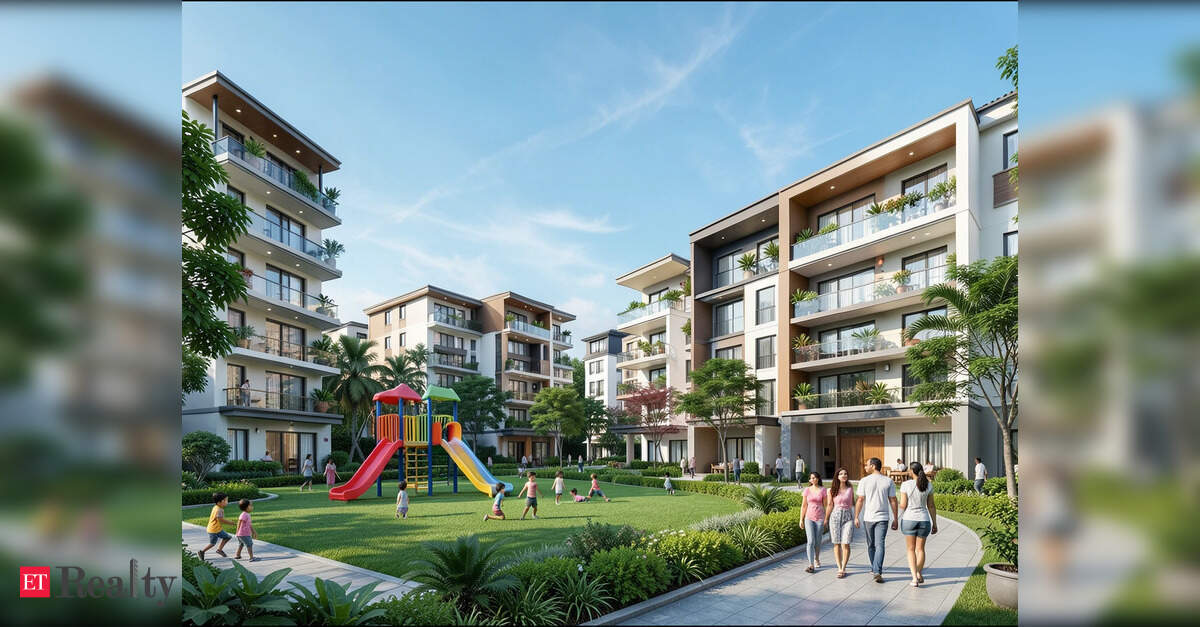
The South India Bet: Why HDFC Capital is doubling down on housing
By The Daily Ledger Editorial Desk · 11/2/2026
HDFC Capital’s new ₹1,500 crore residential platform with DivyaSree highlights a major shift toward institutional consolidation in Indian real estate. By prioritizing tier-1 developers with established track records, the market is sidelining smaller players who struggle with execution. For buyers, this means more reliability, but for the industry, it signals a future dominated by deep-pocketed giants rather than local, independent builders.
When institutional money starts chasing residential real estate, it’s rarely just about building houses; it’s about betting on the consolidation of a fragmented market. HDFC Capital’s ₹1,500 crore partnership with DivyaSree Developers to build homes in Bengaluru, Chennai, and Hyderabad confirms what we’ve suspected: the era of the mom-and-pop developer is gasping for air, and the era of the institutional-backed titan is here.
DivyaSree is best known for their massive commercial parks—the glass-and-steel behemoths that define the work lives of India's tech workforce. Pivoting this expertise toward residential projects isn’t a stretch; it’s a strategy. By tapping into the high-intent buyers who already work in their commercial campuses, they are effectively capturing the entire lifecycle of the urban professional. It’s smart, it’s sticky, and it lowers their customer acquisition cost significantly compared to a standalone residential player trying to run ads on Instagram.
So, what does this mean for the sector? For starters, unit economics in residential real estate are notoriously tricky. Between regulatory hurdles, fluctuating steel costs, and the need for high-end amenities, developers often bleed cash on execution delays. By partnering with HDFC Capital, DivyaSree isn’t just getting a cheque; they are getting a partner that demands operational discipline. Institutional capital acts as a filter—if your project isn’t viable, you don’t get the funding. This brings a layer of much-needed rigour to a segment often plagued by half-finished concrete skeletons.
For the smaller developers, the message is chilling. As institutional funds flock to tier-1 players with proven track records, the cost of capital for independent builders will only rise. If you’re a developer without the pedigree or the scale to attract private equity, you’re looking at a shrinking pool of debt, likely at interest rates that make your internal rate of return look miserable. Consolidation is the only natural end-game.
But let’s look at the buyer. This trend is a win for the urban professional. It promises standardisation and project delivery security, which has been the Achilles' heel of Indian real estate for decades. If you’re an investor looking at the residential space, don’t look at the project; look at the partner. The risk is no longer just about the construction; it’s about who has the staying power to navigate a high-interest-rate environment.
Is this shift toward institutional-led housing the final nail in the coffin for the local developer? Or is there still room for boutique builders who know their neighborhoods better than any fund ever could? I’d love to hear your thoughts on whether this level of centralization is actually good for the long-term health of our cities.
Opinion reflects the author's views. Published by The Daily Ledger, a MAJ Medias publication. Spotted an error? Request a correction